Why Waistbands Roll Down on Midsize Bodies - and the Three Features That Actually Hold
Quick Answer: A waistband rolls when the band is narrower than the curve it is sitting on. On midsize bodies with a defined waist-to-hip difference, a narrow band bridges a curve it cannot follow, and the fabric folds to relieve the tension. The features that actually stop it are a band 4 inches or wider, a contoured cut rather than a straight tube, and a band with higher recovery than the leg fabric - not a tighter size.
Sizing down increases the tension that causes the fold. It is the most common fix and the one that reliably makes it worse.
Once you see why, the shopping filter gets very simple.
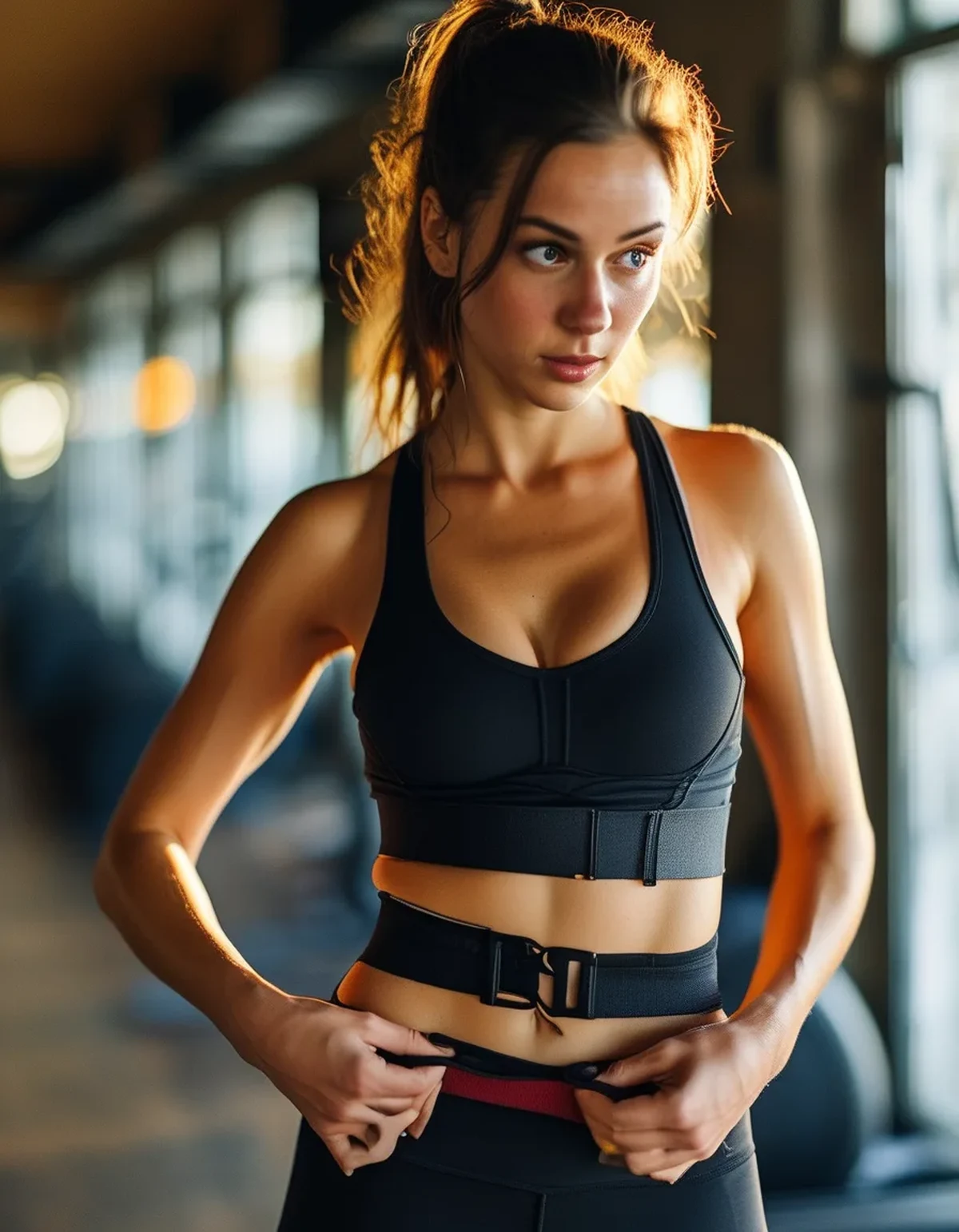
Why does a waistband roll instead of just staying put?
It is a geometry problem before it is a fit problem.
A standard waistband is essentially a straight tube of fabric sewn onto a curved garment. Your torso between the natural waist and the hip is not a cylinder - it is a cone that changes diameter over a few inches.
When a straight band sits across a changing diameter, the top edge and bottom edge are under different tension. The fabric resolves that imbalance by folding, which is the least-energy solution available to it. That fold is the roll.
Midsize bodies frequently have a waist-to-hip difference in the 10-14 inch range, which is a steeper cone than straight-size patterns are drafted for. Same garment, steeper curve, more tension differential, faster roll.
So the roll is not evidence that the band is loose. It is evidence that the band is fighting a shape it was not cut for.
Why does sizing down make it worse?
Because it increases the exact force that causes the fold.
Sizing down raises the tension across the whole band. The top edge, which is sitting on the smaller diameter, is now under proportionally more strain relative to the bottom edge. Greater differential, stronger fold.
It also introduces a second problem: a band tight enough not to slip is often tight enough to create a visible compression line and genuine discomfort during deep hip flexion - squats, lunges, hip hinges.
And there is a third: the tighter band pulls the rise down. The band ends up sitting lower on the torso, which puts it on an even steeper part of the curve.
Sizing up has the opposite failure - the band slips down instead of folding. Neither direction solves it because size is the wrong axis entirely.
5 mistakes that guarantee a rolling waistband
1. Buying by size chart alone. Two brands’ size 12 can differ by 2 inches in waist and 3 in hip. Look for a brand that publishes waist and hip separately and buy on the larger measurement, then adjust with band features.
2. Choosing a thin band because it looks sleeker. Bands under about 2.5 inches roll on almost every body with a defined waist. The sleek look lasts until the first set.
3. Ignoring the fabric weight. Lightweight, very stretchy fabric rolls more - it has less structure to resist folding. A denser knit with 20-25% elastane holds its shape substantially better than a thin 12% fabric.
4. Assuming silicone grippers help. Grippers stop the band from sliding against skin. Rolling is fabric folding over itself, which grippers do nothing about. They are solving a different problem.
5. Not testing seated. Stand in the fitting room and everything looks fine. Sit, hinge forward, and do one bodyweight squat. A band that is going to roll will announce itself within three movements.
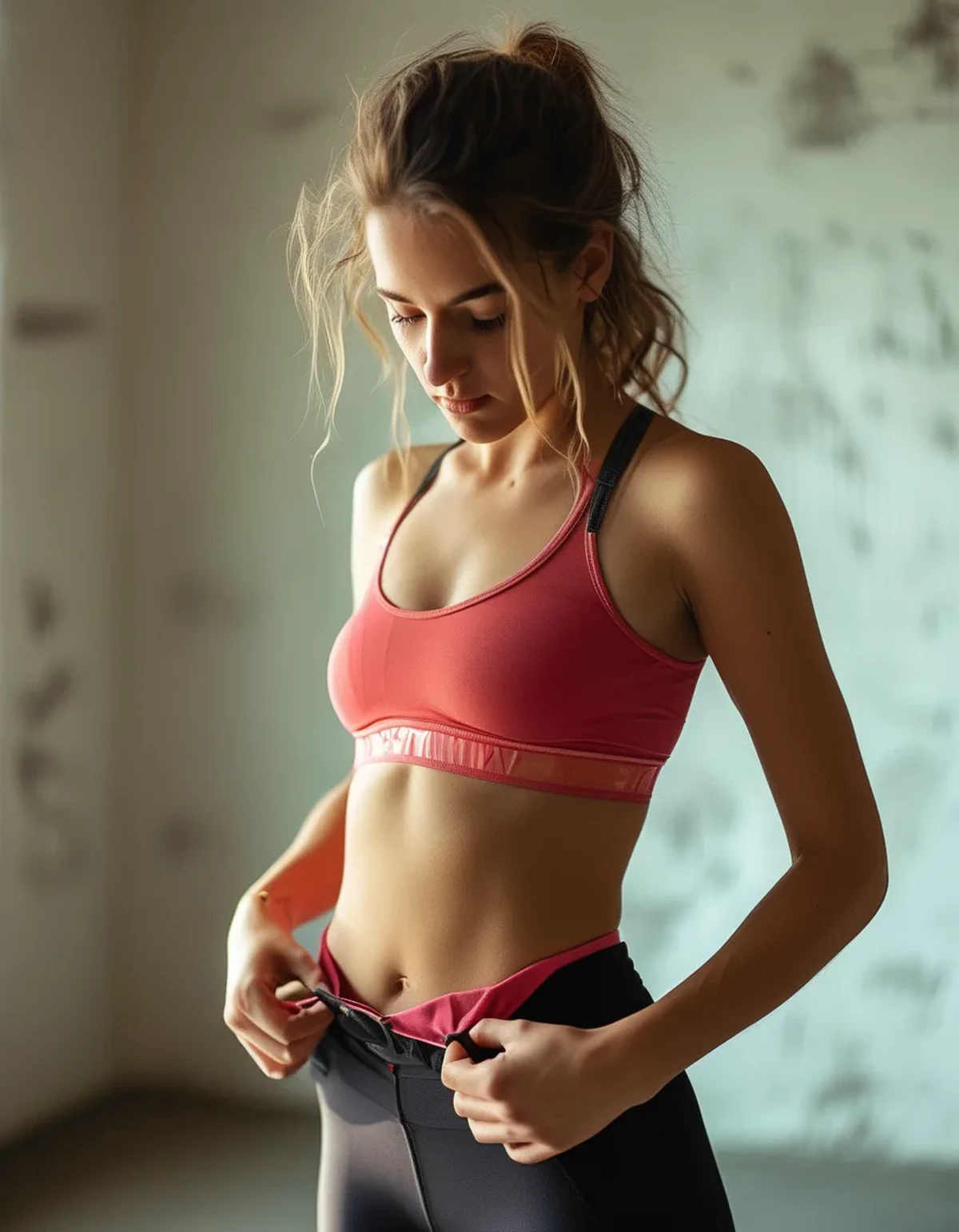
What features actually hold, in order of effectiveness?
1. Band width - 4 inches or more. The single biggest factor. A wide band spans the curve across more surface area, so the tension differential per inch drops dramatically. This is why the high-rise wide-band style became standard: it works.
2. Contoured or shaped cut. Look for a band that is cut higher at the center back and shaped at the sides, or one built from two curved panels rather than one straight strip. Some brands call it a V-back or contour waist. This addresses the cone problem directly.
3. Higher recovery in the band fabric. Recovery is how fast fabric returns to shape after stretch - different from stretch itself. Bands with dedicated higher-elastane fabric hold; bands cut from the same fabric as the leg do not. Brands that do this well usually mention it in the description.
4. Internal drawcord. Adds circumferential control without adding surface tension. Useful for bodies whose waist measurement changes across a month or a season.
5. A gusseted crotch. Indirect but real - a gusset keeps the garment tracking straight so the band is not pulled asymmetrically.
Does anything work on leggings I already own?
A few things, with honest limits.
Wearing the band folded down deliberately turns an unstable single layer into a stable double one. It lowers the rise, which is a real trade, but it stops the mid-workout fold. Works surprisingly well on 3-inch bands.
A wide compression band or a longline sports bra layered over the top edge holds the band flat. Adds warmth, which is fine heading into fall and unpleasant in August.
A tailor can add a channel and internal elastic to a wide band for roughly $15-25. Worth it on an expensive pair, not on a $30 pair.
What does not work: safety pins (they tear the knit), fabric tape (it fails with sweat), and washing hot to shrink them (this degrades elastane and produces a tighter band that rolls exactly the same way).
For the next purchase, filter on band width first. It resolves the majority of cases on its own.
FAQ: Midsize Waistband Questions, Answered
Is this only a midsize problem?
No, but it is more common on bodies with a larger waist-to-hip difference, which includes a lot of midsize shapes. Straight-size patterns are drafted for a shallower curve than many real bodies have.
Do more expensive leggings roll less?
Sometimes, and not because of price - because higher-priced lines are more likely to use a contoured band and separate band fabric. Check the band construction, not the price tag.
Should I look at maternity-style bands?
A full-panel band genuinely does not roll, and some people wear them for that reason alone. Worth trying if nothing else has worked, though the rise sits very high.
TL;DR:
- Rolling is a geometry problem - a straight band on a curved torso folds to relieve uneven tension.
- Sizing down makes it worse, sizing up makes it slip. Size is the wrong axis.
- Buy on band width first: 4 inches or more. Then contoured cut, then dedicated band fabric.
- Grippers do not stop rolling - they solve sliding, which is a different failure.
- Test seated and squatting in the fitting room; a rolling band shows itself in three movements.
The genuinely annoying part is that this was never about your size. Once you shop on band construction, the problem mostly disappears - and stays gone.
See It in Motion
Seen here: Super High Waist Embossed Yoga Leggings with Inner Pocket — shop it on bubblelime.com
Keep Reading
This article is for general informational and styling purposes only. Fit, sizing, and product availability may vary.
