Why Midsize Bodies Often Need Tailoring More Than They Need a Different Size
Quick Answer: Midsize bodies frequently fall between the last straight size and the first plus size a brand offers, and neither adjacent size actually matches the specific proportions in between — sizing up typically adds width everywhere rather than fixing the one or two spots that don’t fit, which is why tailoring the closer-fitting size usually solves the problem faster and more precisely than chasing a different number.
The next size up felt loose in the shoulders but still tight at the hip. The size down fit the hip but wouldn’t zip at the waist. Neither size actually matched the body — because the gap wasn’t really about size at all.

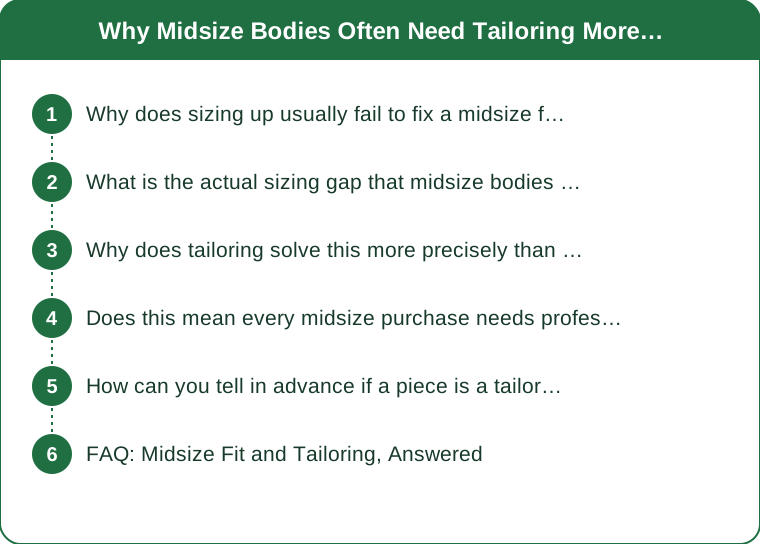
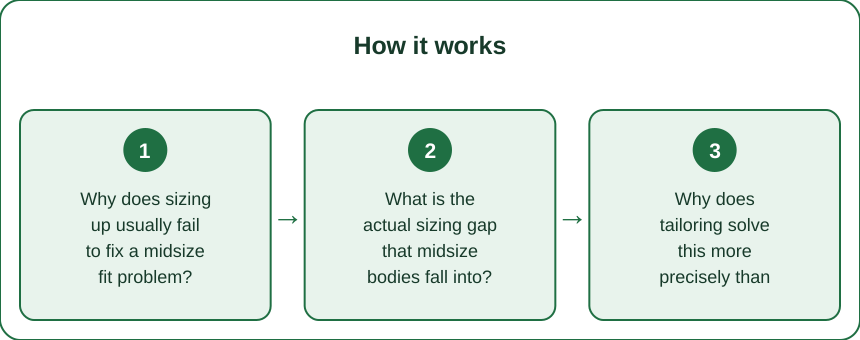
Why does sizing up usually fail to fix a midsize fit problem?
Sizing up in ready-to-wear clothing adds fabric proportionally across the entire garment, not selectively to the one area that actually needs more room. If the issue is specifically hip width while shoulders and waist already fit, sizing up ‘fixes’ the hip while creating new excess everywhere else — trading one fit problem for several smaller ones.
What is the actual sizing gap that midsize bodies fall into?
Many brands design their straight-size range assuming a particular waist-to-hip ratio, and their plus-size range assuming a different one, with a real gap in between where midsize proportions (often closer straight-to-plus fit ratios than either range assumes) don’t match either block’s assumptions well, regardless of the specific number on the tag.
Why does tailoring solve this more precisely than resizing?
A tailor can take in or let out a garment at the exact point of mismatch — nipping a waist, letting out a hip seam — without disturbing the fit that’s already correct elsewhere. This targeted adjustment addresses the actual proportion gap directly, rather than hoping a different overall size happens to match by coincidence.

Does this mean every midsize purchase needs professional tailoring?
Not every piece — simple tops and looser silhouettes often don’t need it. But for fitted pieces (blazers, structured dresses, tailored pants) where proportion mismatch is most visible, budgeting for basic tailoring (a hem, a waist take-in) as part of the actual cost of the garment usually produces a better result than repeated size-swap returns.
How can you tell in advance if a piece is a tailoring candidate versus a true wrong-size situation?
If one specific area doesn’t fit while the rest of the garment fits well, that’s a tailoring candidate. If the entire garment is uniformly too tight or too loose everywhere, that’s more likely an actual wrong-size situation worth exchanging rather than altering.
FAQ: Midsize Fit and Tailoring, Answered
Is tailoring worth the added cost compared to just returning for a different size?
For pieces you plan to wear regularly, usually yes — the cost of basic alterations is often less than the time and shipping cost of multiple size-swap returns that may not fully solve the problem anyway.
Does dressing for your actual proportions matter more than the size label itself?
Yes — knowing your specific proportion pattern (where you run larger or smaller relative to a standard size chart) is more useful long-term than fixating on which number fits best.
Are more brands starting to address the midsize gap directly?
Some brands have begun offering a genuine midsize-specific range rather than just extending straight sizing incrementally, though this remains inconsistent across the industry.
TL;DR:
- Midsize bodies often fall in a genuine gap between straight and plus size chart assumptions
- Sizing up adds fabric everywhere, not just where it’s actually needed, often creating new problems
- Tailoring targets the exact mismatch point without disturbing fit that’s already correct elsewhere
- Budget basic alterations into the real cost of fitted pieces rather than chasing the perfect size number
Next fitted piece that almost-but-not-quite fits, check if it’s a tailoring candidate before assuming a different size will solve it.
Keep Reading
This article is for general informational and styling purposes only. Fit, sizing, and product availability may vary.
