Why Midsize Bodies Often Need Tailoring, Not a Different Size
Quick Answer: Midsize bodies often fall between the proportions straight-size and plus-size patterns are drafted for — meaning a size change shifts overall garment volume but doesn’t fix the specific proportion mismatch causing the poor fit. Tailoring targets the actual problem area directly.
You’ve sized up for room in the hips, only to end up swimming through the shoulders and waist. Sizing back down fixes that, but brings the hip tightness right back. The size was never really the variable that mattered.
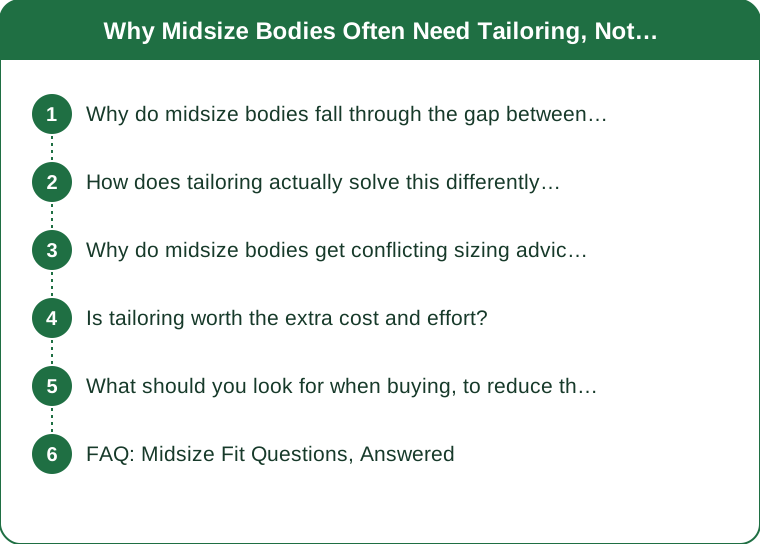
Why do midsize bodies fall through the gap between straight and plus sizing?
Most clothing brands draft patterns around two separate proportion templates — one for straight sizes, one for plus sizes — and the transition zone between them often isn’t graded with a smooth, proportional in-between. A midsize body can need straight-size volume in the shoulders and plus-size volume in the hips simultaneously, a combination neither template anticipates well.
How does tailoring actually solve this differently than sizing does?
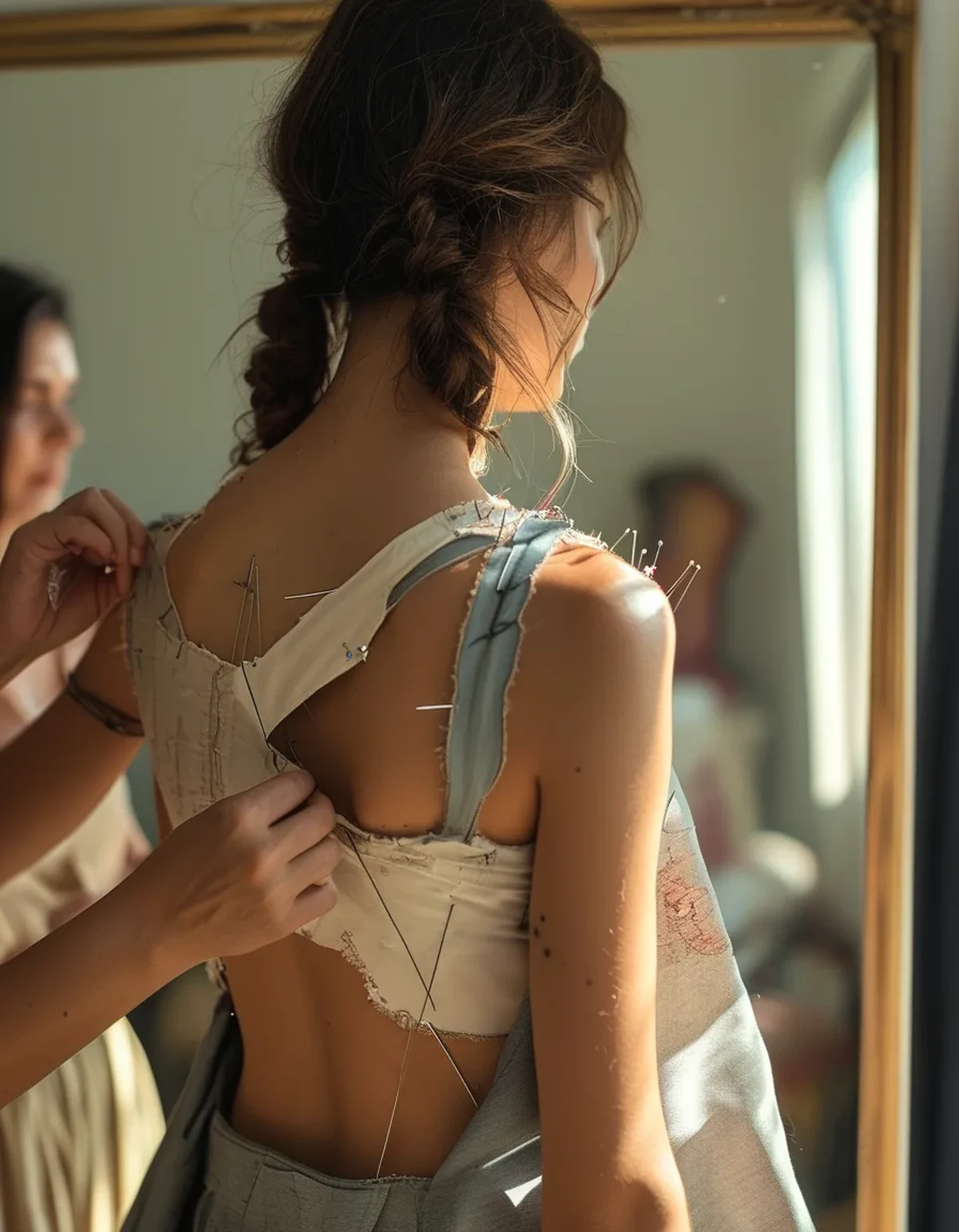
Sizing changes the entire garment proportionally — every measurement scales together. Tailoring changes only the specific problem area: taking in a waist while leaving hip room intact, or letting out a hip seam without touching the shoulders. That targeted adjustment fixes the actual mismatch, which uniform scaling structurally cannot.
Why do midsize bodies get conflicting sizing advice so often?
Because ‘size up for the hips’ and ‘size down for the shoulders’ are both accurate individually, but contradictory as combined advice — since no single size satisfies both. This is exactly why midsize-specific sizing guidance so often feels frustrating or circular: the advice isn’t wrong, it’s describing a problem that sizing alone cannot solve.

Is tailoring worth the extra cost and effort?
For pieces you wear often or paid a meaningful amount for, yes — a basic waist-and-hip tailoring adjustment (often $15-40 depending on the garment and location) frequently transforms a barely-wearable piece into one that fits genuinely well, which is a better return than repeatedly buying and returning different sizes hoping for a lucky fit.
What should you look for when buying, to reduce the need for tailoring?
Brands offering separate waist and hip measurements (not just a single size chart number), stretch-inclusive fabrics that flex to accommodate proportion variance, and adjustable features (drawstrings, elastic panels, wrap closures) all reduce how much tailoring is needed after purchase.
FAQ: Midsize Fit Questions, Answered
How do I know if I should size up, down, or get something tailored?
If one specific area (not the whole garment) feels off, tailoring targets it directly; if the entire garment feels uniformly too tight or loose, a size change is the more appropriate first step.
Do all clothing brands have this midsize sizing gap?
It varies significantly — some brands have invested specifically in extended, proportionally-graded size ranges that handle the midsize transition better than others; reading fit reviews from similarly-proportioned shoppers helps identify these.
Is midsize a specific dress size range?
There’s no single agreed-upon number, but it’s commonly used to describe the range roughly between standard straight sizing and plus sizing, where fit inconsistency across brands is most pronounced.
TL;DR:
- Midsize bodies often need straight-size volume in one area and plus-size volume in another simultaneously
- Sizing changes the whole garment; tailoring changes only the problem area
- Contradictory sizing advice usually reflects a real, unsolvable-by-sizing-alone mismatch
- Look for separate waist/hip measurements and stretch-forward fabric to reduce tailoring need
Dressing for your actual proportions, not just a size label, is usually the faster path to genuinely good fit.
Keep Reading
This article is for general informational and styling purposes only. Fit, sizing, and product availability may vary.
