Why Midsize Bodies Get Conflicting Sizing Advice From Every Direction
Quick Answer: Midsize bodies fall between straight-size and plus-size grading systems that most brands design around, so sizing advice conflicts because different brands are actually built on entirely different underlying size charts and body assumptions. Checking a brand’s specific measurements rather than relying on size labels or general advice resolves most confusion.
One brand’s size guide says one thing, another says the opposite, and a size that fits perfectly in one place does not fit at all in another — for midsize bodies, this is a structural sizing problem, not personal inconsistency.

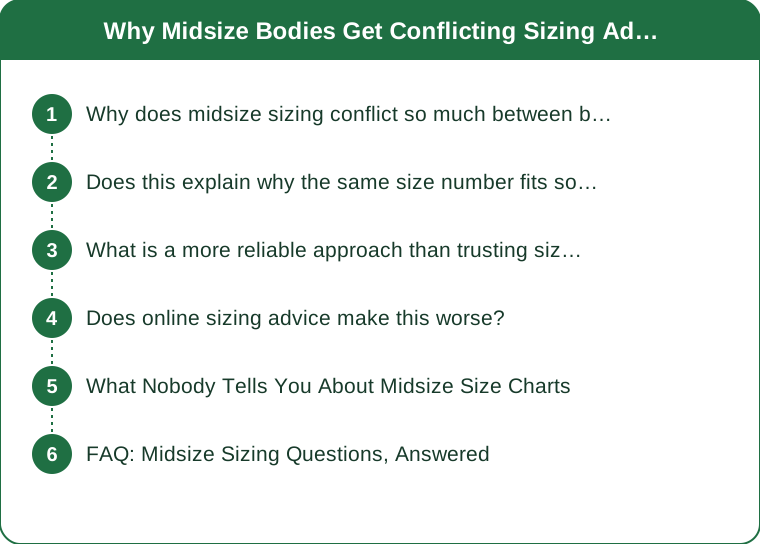
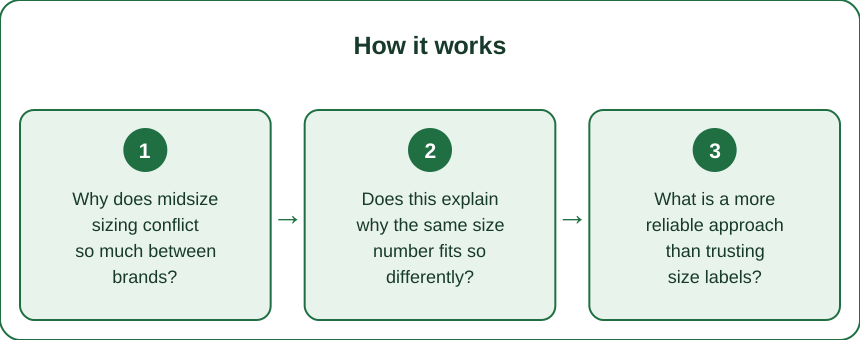
Why does midsize sizing conflict so much between brands?
Most clothing brands build their size charts around either a straight-size or plus-size core customer, and midsize bodies fall in the gap between those two grading systems, meaning a brand’s midsize offerings are often an afterthought extension of one system or the other rather than a purpose-built size range.
Does this explain why the same size number fits so differently?
Yes — because midsize ranges are typically extensions of one grading system or the other, the same size label can represent meaningfully different actual measurements between a brand extending down from plus sizing versus one extending up from straight sizing.
What is a more reliable approach than trusting size labels?
Checking a brand’s actual garment measurements, not just the size label, and comparing them against your own measurements or a well-fitting existing piece gives a far more reliable fit prediction than following general sizing advice across brands.

Does online sizing advice make this worse?
Often, since general internet sizing advice tends to assume one grading system implicitly, applying advice calibrated to straight sizing to a plus-extended midsize brand, or vice versa, can lead to a confidently wrong size choice.
What Nobody Tells You About Midsize Size Charts
Some brands’ midsize range is grading straight sizing up while others are grading plus sizing down, and these two approaches can produce genuinely different results at the same labeled size, which is a structural reason midsize shoppers experience more sizing inconsistency than either adjacent category.
FAQ: Midsize Sizing Questions, Answered
Is there a way to predict fit before buying, without trying on?
Comparing a brand’s exact garment measurements to a piece you already own and know fits well is the most reliable available method without an in-person try-on.
Do brands with dedicated midsize lines fit more consistently?
Generally yes — brands that treat midsize as its own designed category, rather than an extension of either adjacent system, tend to produce more internally consistent sizing.
Is this sizing inconsistency likely to improve over time?
Gradually — growing demand and awareness of the midsize gap has led more brands to treat it as a deliberate design category rather than an afterthought extension.
TL;DR:
- Midsize bodies fall structurally between straight-size and plus-size grading systems
- The same size label can represent different actual measurements between brands
- Checking actual garment measurements is more reliable than trusting size labels alone
- Brands with dedicated midsize design tend to size more consistently than extensions of either system
Conflicting midsize sizing advice reflects a real structural gap between grading systems, not an unsolvable personal fit mystery.
Keep Reading
This article is for general informational and styling purposes only. Fit, sizing, and product availability may vary.
