Why Dressing for Your Actual Proportions Beats Chasing a Size Label
Quick Answer: Size labels vary so much between brands that using them as a shopping shortcut for a midsize body usually backfires — measuring your actual waist-to-hip ratio and torso length, and shopping against a brand’s specific size chart every time, produces a far more consistent fit than chasing a number.
A size 12 in one brand and a size 12 in another can differ by two inches or more at the waist. For a midsize body sitting right at the edge of where straight and plus size charts diverge, that inconsistency isn’t a minor annoyance — it’s the main reason shopping feels like guesswork.

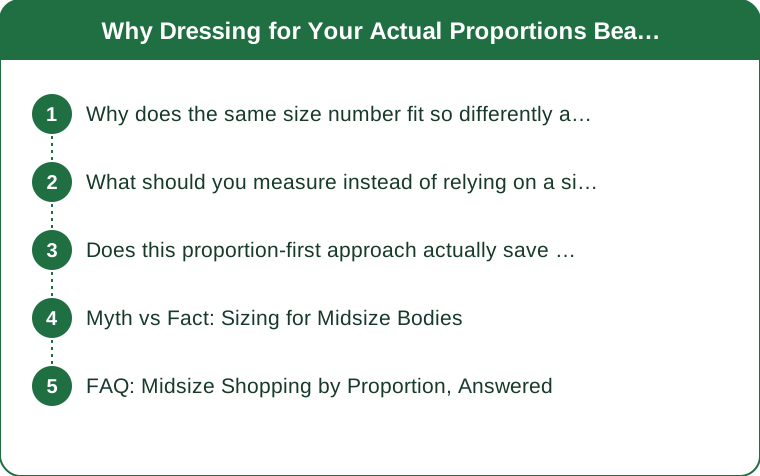
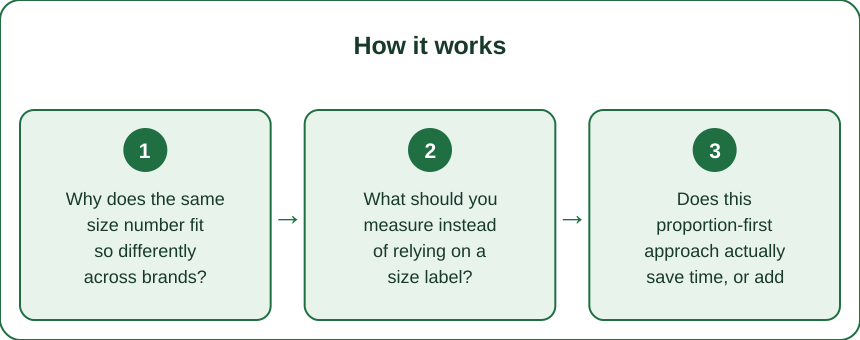
Why does the same size number fit so differently across brands?
There’s no universal, regulated sizing standard across clothing brands — each company sets its own size chart based on its own target customer’s average measurements, which vary by brand positioning, era the chart was designed in, and manufacturing origin. This is exactly why a midsize body — often sitting right at the boundary where a brand’s straight-size chart tops out and its plus-size or extended chart begins — experiences the widest inconsistency, since that boundary point is where brands are least standardized.
The practical result: relying on ‘I’m usually a size 12’ as a shopping shortcut fails more often for midsize bodies than for bodies comfortably in the middle of a brand’s standard range.
What should you measure instead of relying on a size label?
Waist, hip, and bust measurements in inches, plus your waist-to-hip ratio and torso length, give you numbers that don’t change no matter what a brand calls them. Every reputable brand’s website lists a size chart mapping these measurements to their specific sizing — checking your actual numbers against that chart, every single time, is more reliable than assuming your size carries over from the last brand you bought.
Torso length in particular gets overlooked but matters a lot for how a top or dress actually sits — two people with an identical waist measurement can need very different lengths depending on proportion, which a size number alone never captures.

Does this proportion-first approach actually save time, or add a step?
It adds one step upfront — checking a size chart before ordering — but it removes the much bigger time cost of returns and re-orders that come from guessing based on size label alone. Once you know your actual measurements, checking them against a chart takes under a minute, and it becomes a faster, more reliable process than the trial-and-error of ordering your ‘usual’ size and hoping.
Myth vs Fact: Sizing for Midsize Bodies
Myth: If you know your size in one brand, you basically know it everywhere. Fact: Size numbers aren’t standardized across brands, and the inconsistency is often largest exactly at the midsize boundary between standard and extended size charts.
Myth: Vanity sizing means everything runs smaller than it used to, so sizing up is always the fix. Fact: Some brands run generously, others run small — the direction and degree varies enough that only checking the specific brand’s current chart tells you anything reliable.
FAQ: Midsize Shopping by Proportion, Answered
How often should I re-measure myself for shopping purposes?
Body measurements can shift gradually over months or with life changes, so a re-measure every 6-12 months (or after any noticeable weight or body composition change) keeps your reference numbers accurate for shopping.
What if a brand doesn’t publish a detailed size chart?
Treat that as a signal to buy from a return-friendly retailer or check third-party reviews mentioning fit and true-to-size feedback, since a missing size chart makes proportion-based shopping much harder to do accurately.
Does shopping by proportion help with fit issues beyond just the right size number, like gapping or pulling?
Yes — knowing your torso length and waist-to-hip ratio also helps you predict where a specific cut is likely to gap or pull before buying, since those issues are usually proportion mismatches rather than pure size mismatches.
TL;DR:
- Size numbers aren’t standardized across brands, and the gap is widest at the midsize boundary
- Measure waist, hip, bust, and torso length in inches — those numbers don’t change by brand
- Check your actual measurements against each brand’s specific size chart, every time
- This adds a minute upfront but saves far more time lost to returns and re-orders
Once you’re shopping by your own numbers instead of a label, the whole process gets noticeably less frustrating.
Keep Reading
This article is for general informational and styling purposes only. Fit, sizing, and product availability may vary.
